

Rotary kiln
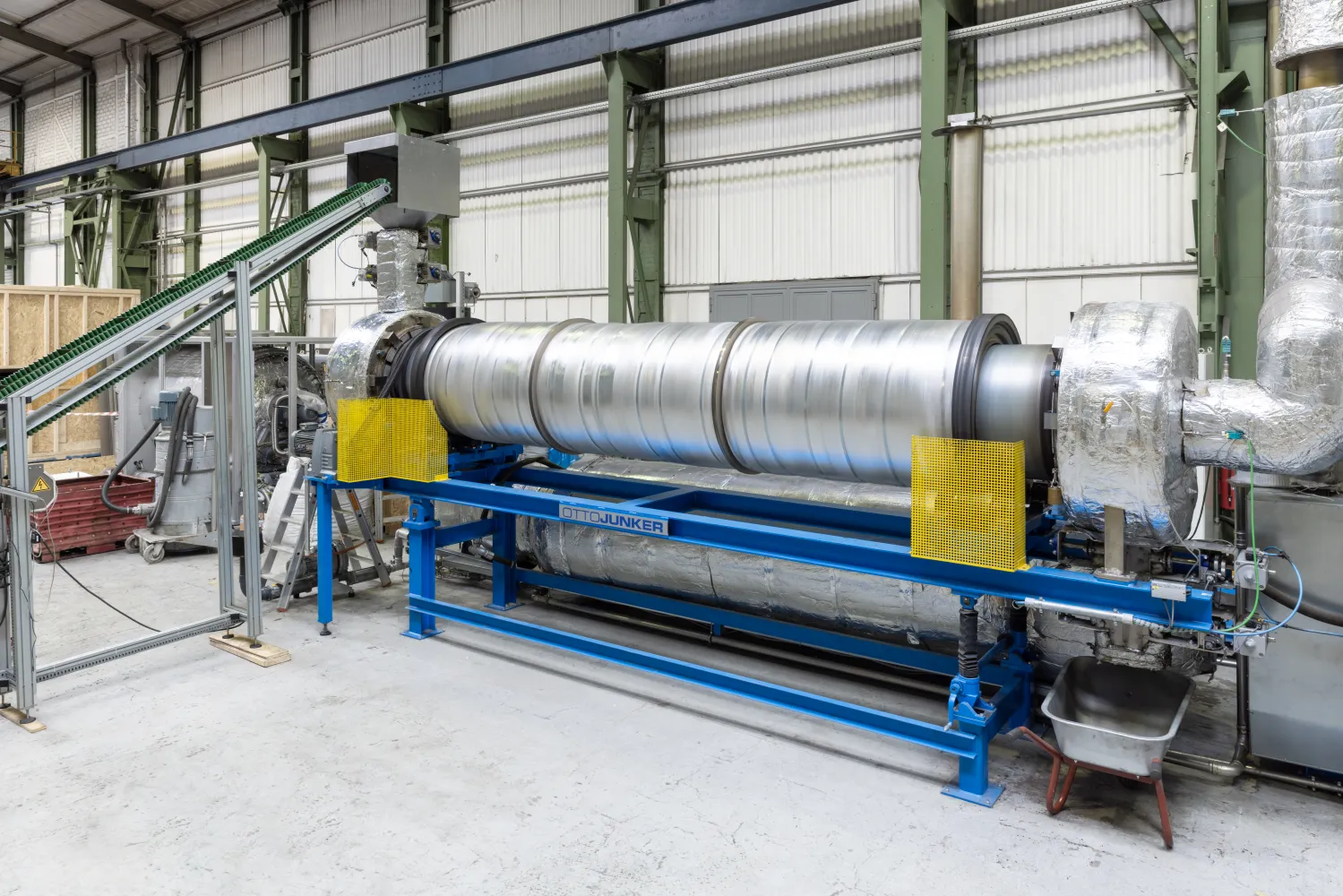
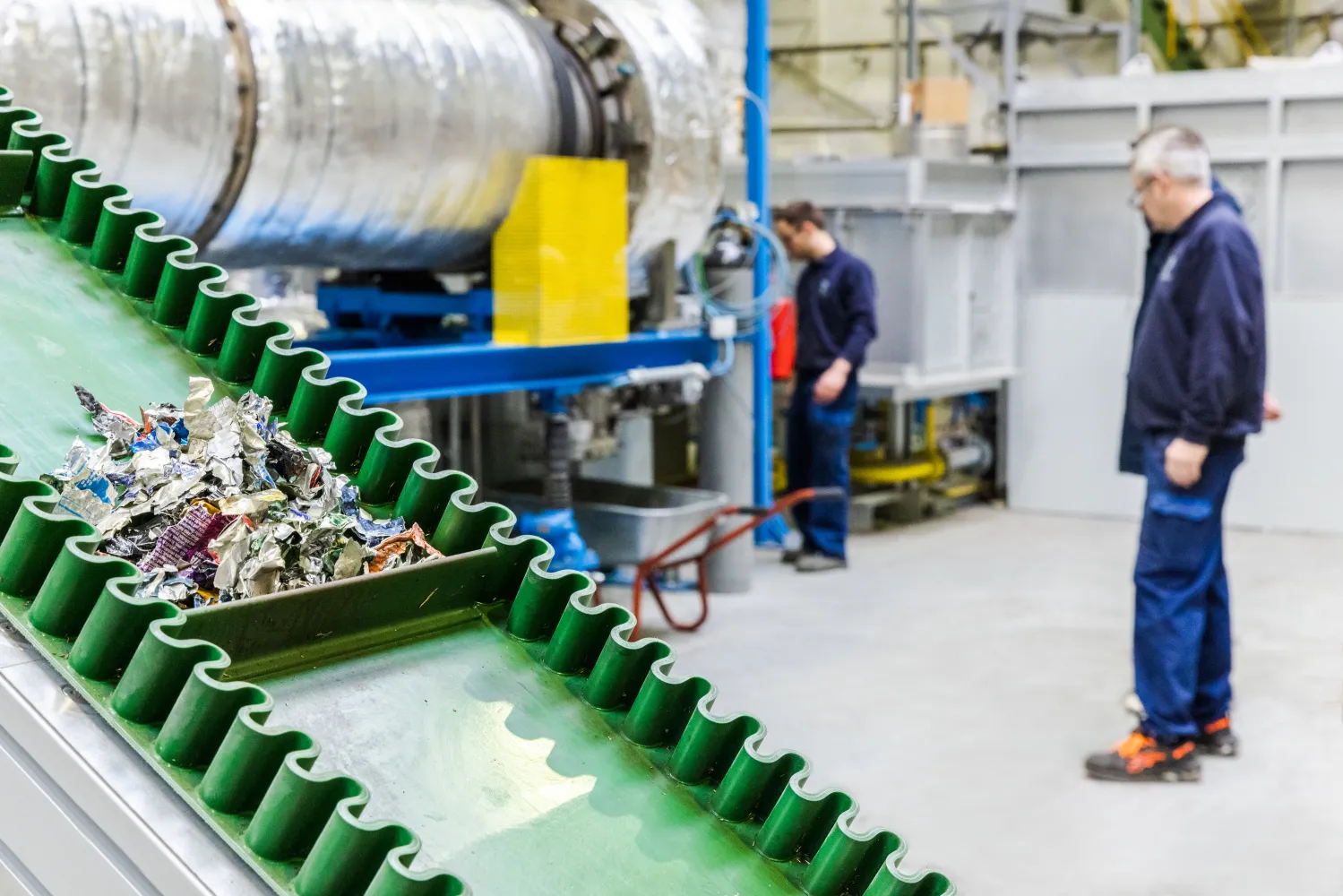
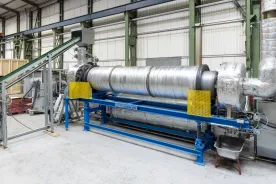
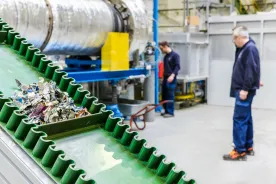
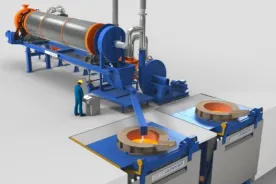
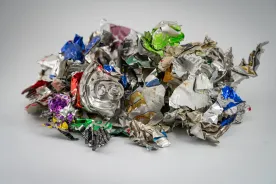
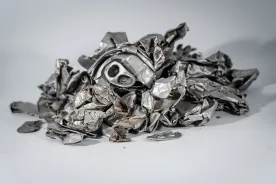
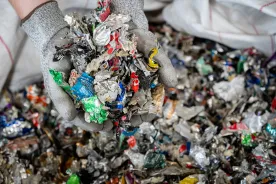
The rotary kiln is one of the key units in thermal recycling processes and is characterized by its high flexibility with respect to a wide range of feed materials. It is primarily used for drying, removal of organic components, and pyrolytic treatment.
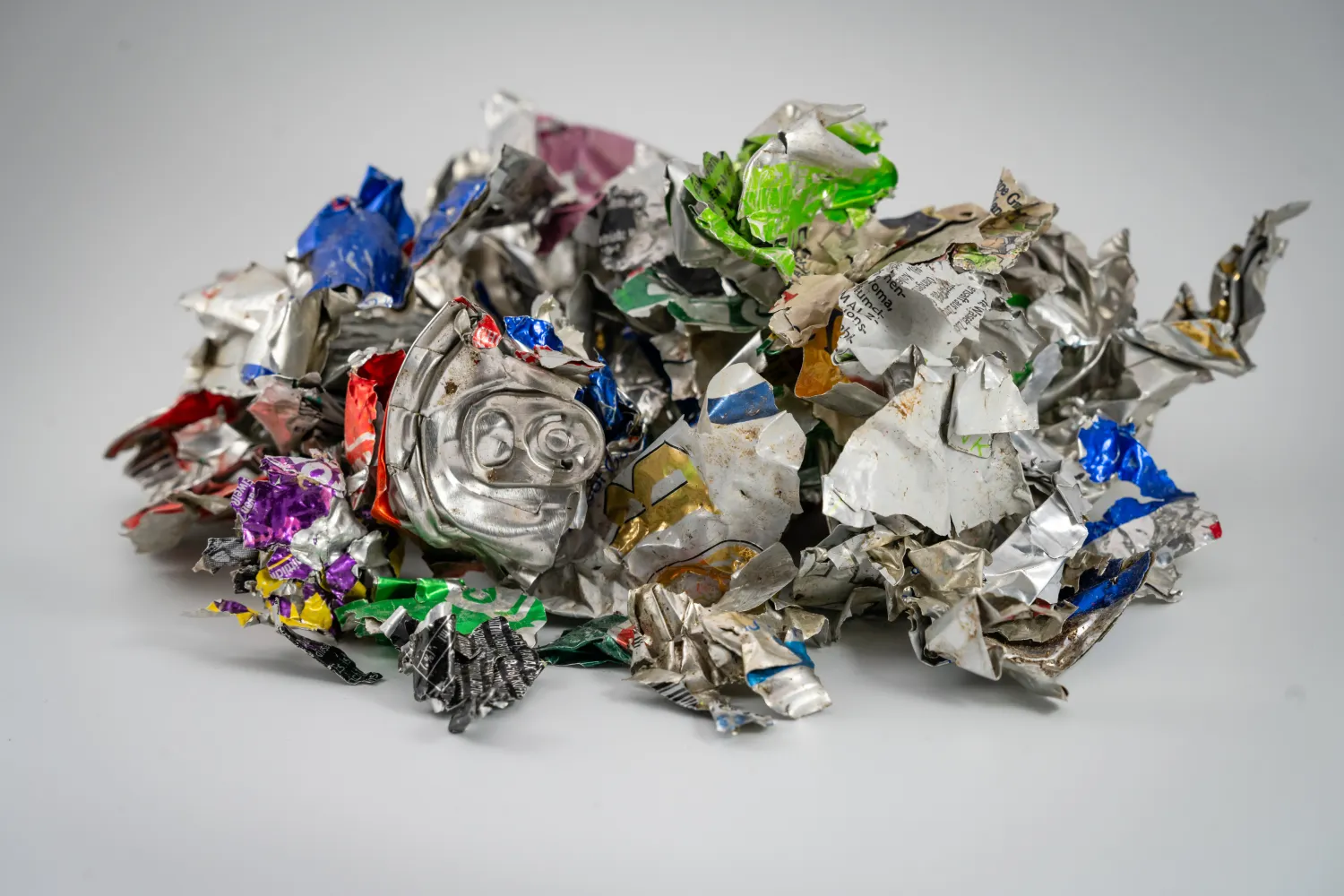
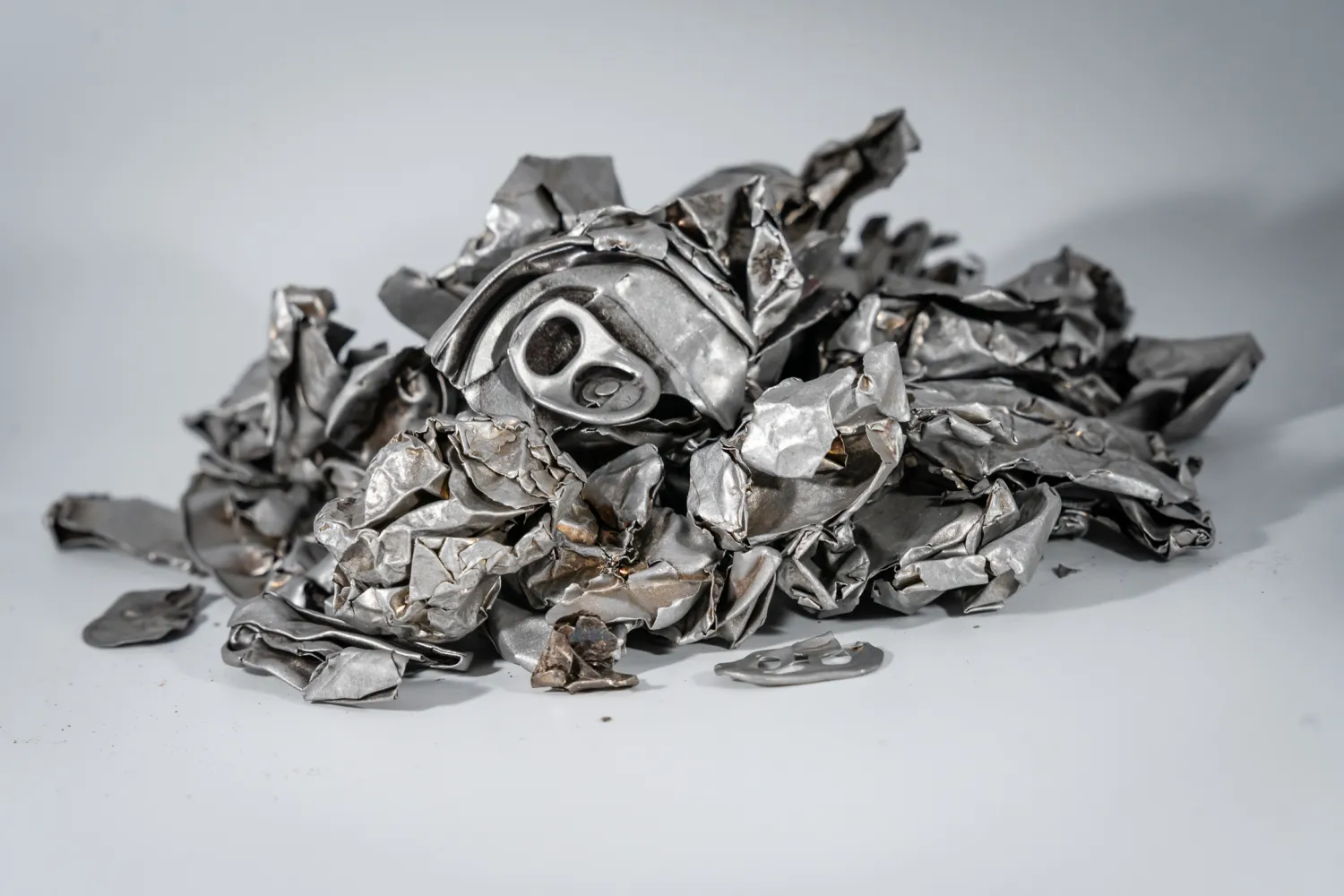
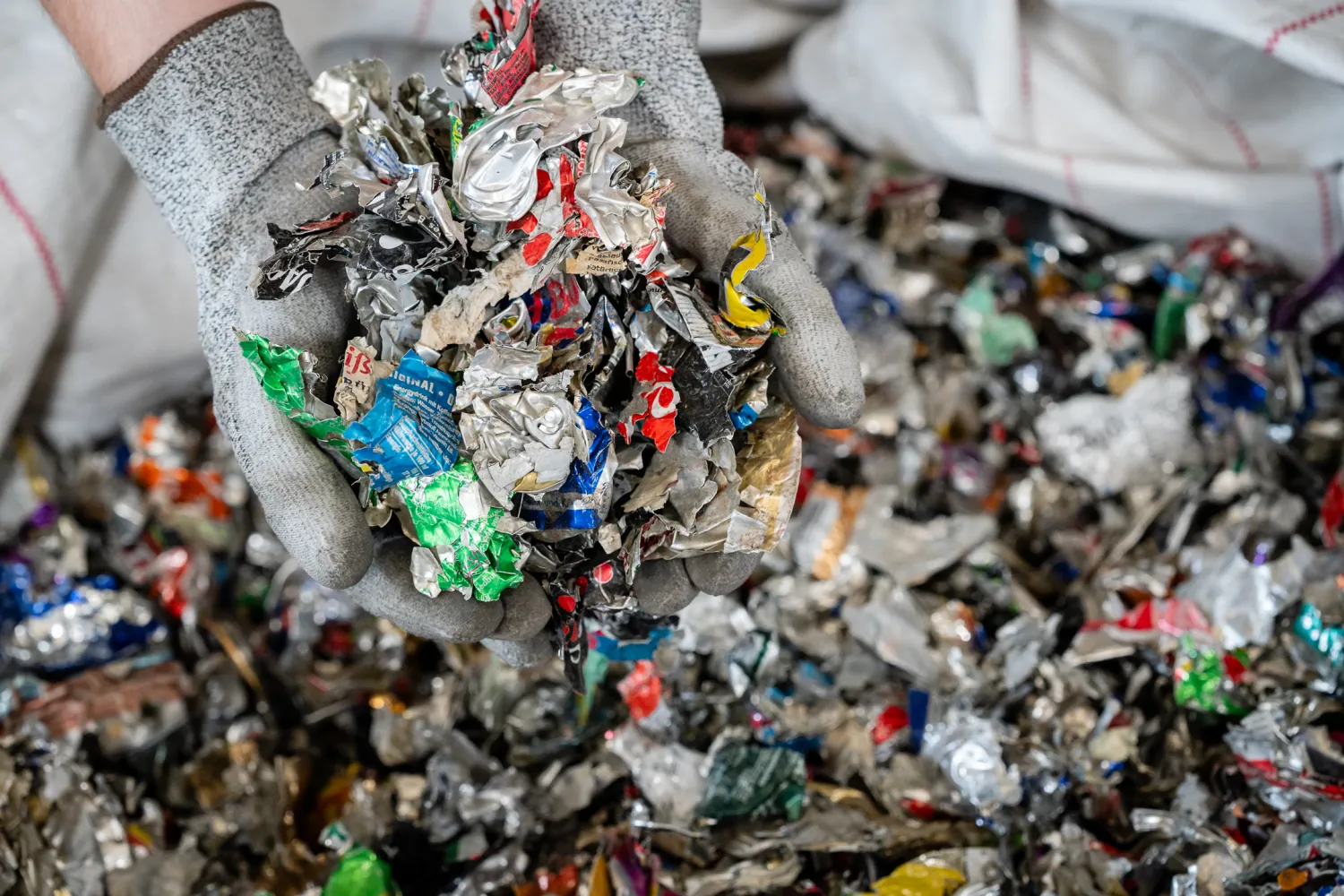
Typical applications include decoating of UBC (used beverage cans), treatment of organically contaminated scrap and turnings, biomass pyrolysis, as well as thermal treatment of sewage sludge and contaminated soils. The energy content of the feed material can be utilized within the process to reduce external energy demand.
Scalable design enables adaptation to a wide range of process requirements. Depending on the material and process configuration, throughputs of up to 20 t/h can be achieved.
From a design perspective, rotary kilns are available as direct-fired or indirect-fired systems, with hybrid heating concepts also being feasible.
In direct-fired rotary kilns, heat is transferred via a hot process gas flowing through the rotating drum. The material is continuously mixed by rotation and transported axially along the kiln inclination. Highly efficient heat transfer with uniform thermal treatment. The organic components are transferred into the process gas and can be utilized downstream for energy recovery, reducing external energy demand. The process atmosphere is directly defined by the gas composition. However, due to high gas velocities, this design is only partially suitable for fine or dust-forming materials.
Indirect-fired rotary kilns are used when precise process control is required or when fine-grained materials need to be processed. Heating is applied through the kiln shell, typically electrically, with heat transfer via radiation and conduction. Since no hot gas flow through the drum is required, gas velocities remain low, minimizing material carryover. Low gas velocities enable processing of fine and dusty materials. At the same time, a fully inert process atmosphere can be maintained. As with direct-fired systems, the energy content of released organics can be recovered via suitable off-gas and heat recovery systems.
A key application is the pyrolytic pre-treatment of metallic feed materials. In UBC recycling, reduced oxygen in the atmosphere significantly reduce oxidation, resulting in higher metal yield. >20% increase in aluminum recovery in melting trials can be achieved. In combination with a downstream induction furnace, the pre-treated material enters the melting process at elevated temperature. Up to 35% reduction in melting energy demand. This configuration supports a high degree of electrification and improves the overall CO₂ balance.
Pilot-scale furnaces are available at the Lammersdorf site to validate different process configurations. A direct-fired rotary kiln with thermal afterburning is already in operation, while an indirectly heated, electrically operated rotary kiln is currently under construction. Both systems can be used for feasibility trials under near-industrial conditions to validate process parameters before investment decisions.
- Recovery of valuable raw materials

through thermal pre-treatment
- Reduced external energy demand

through energetic utilization of organics
- Improved metal yield

through reduced oxidation
Downloads

Contact Person

Magnus Sievers
Development Engineer TRT
+49 2473 601-533
+49 151 1419 7464
magnus.sievers@otto-junker-solutions.com